
FIN
CROSSING THE RED LINE
22 Jan - 07 Feb, 2026
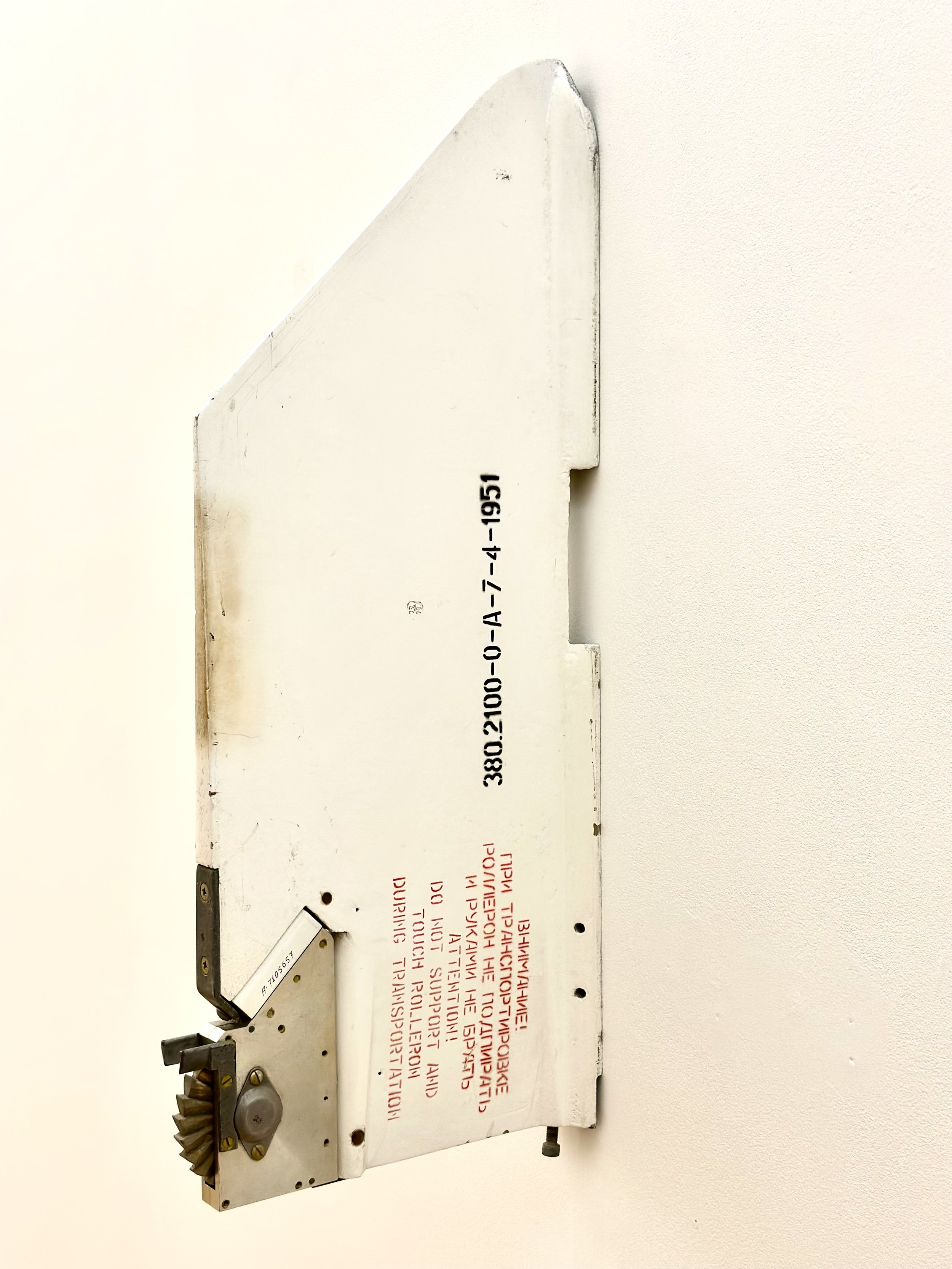
Artist: Unknown Title: FIN (Vympel R-73, “Archer” Sidewinder variant) Country: Russia Date: 2000-2024 Materials: Metal, composite alloys, paint Dimensions: Variable Provenance: Recovered in Ukraine in 2025
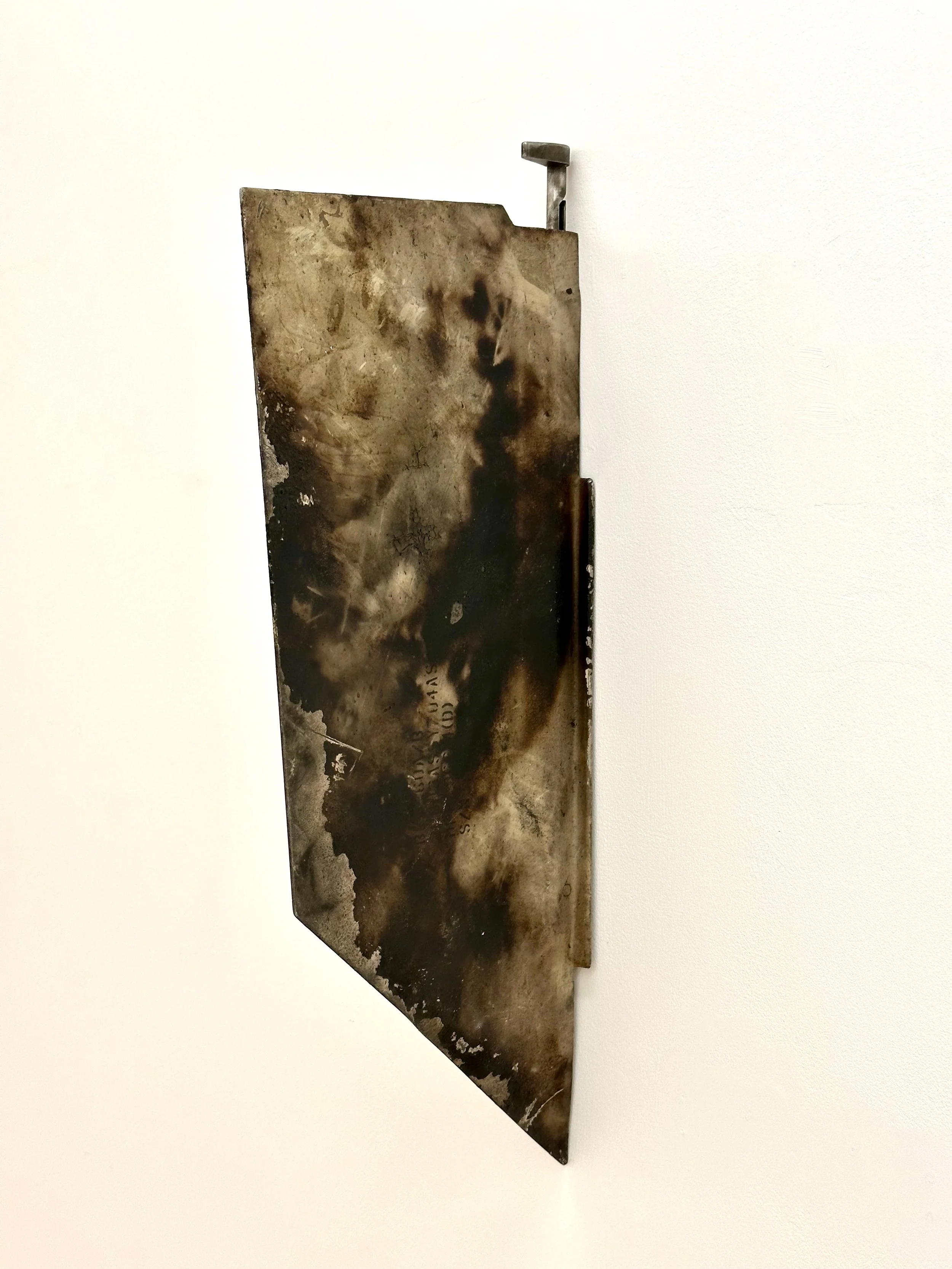
Artist: Unknown Title: FIN (AGM-88 H.A.R.M USA) Country: USA Date: 1983 - present Materials: Metal, composite alloys, paint, smoke and heat damage Dimensions: Variable Provenance: Recovered in Ukraine in 2025
FIN is a gallery practice show, part of an ongoing experimental research project looking at the function of art in the 21st Century.
FIN is best approached less as an artwork and more as a problem placed in the room. The danger here is not that you won’t “get it”, but that you’ll get it too quickly and feel all smug and morally satisfied. Try to resist that, even when the association with violent death feels a bit heavy.
These tail fins are components of missiles designed to find heat and destroy what produced it. Displayed here in the gallery, they take on the appearance of artworks. The question, then, is not “Is this art?” so much as “What does a gallery do to things?”
A missile has no surplus meaning. It is not symbolic. It is not expressive. There can be no irony attached to it. Isolated from its intended function in a gallery, can it ever be aestheticised – or does the gallery perform that transfiguration on its behalf?
The white tail fin is from a Russian-made air-to-air missile recovered in Ukraine, likely part of the R-73 systems still in use in the current conflict. Its serial markings and stabilising rollerons confirm its origin. It appears relatively intact, suggesting it may have been attached to a downed MIG-29 aircraft, or it simply survived ground impact.
The other - burnt - tail fin belonged to a missile deployed by the Ukrainian Armed Forces against Russian targets. It is from a US-made AGM-88 HARM, designed to locate and destroy enemy radar systems.
Each object played a role in necropolitical decision-making: fragments of decisions about who may live and who must die. Here, they are stripped of that agency. Death machines with a second life. But as what? What systems can receive these objects without instrumentalising them? Certainly not the media. Not politics or law. Perhaps not even our own morality.
This exhibition does not ask if “is this art?”
Instead, it asks what happens when art is the last system left that can still receive these objects neutrally. And if that is true, what the implications of this might be. Can art function when the real world arrives into a gallery this way; loaded, raw and unfiltered.
And even if it can, should it?
Scott Lawrie, January 2026